Fine Arts
Biblical Worldview
At Carolina Christian Academy, the study of music is grounded in a biblical understanding that all truth and beauty originate from God, the ultimate Creator. Music, as part of God’s good creation, reflects His order, harmony, and creativity. Therefore, the purpose of musical study is not only to develop technical skill and aesthetic appreciation, but also to cultivate discernment and a heart that seeks to glorify God through artistic expression.
From a biblical worldview, music functions as both an academic discipline and a spiritual practice. Throughout Scripture, music is used to communicate truth, foster community, and express worship (e.g., Exodus 15; Psalms; Colossians 3:16). Students are taught that music has moral and spiritual dimensions, and that believers are called to engage with it thoughtfully and responsibly.
The music curriculum at CCA aims to:
- Develop an understanding of music as a God-given form of communication and worship.
- Equip students with the skills to analyze, perform, and create music with excellence and integrity.
- Foster discernment regarding the messages, purposes, and cultural influences of various musical forms.
- Encourage students to apply biblical principles when engaging with both sacred and secular music.
- Inspire an appreciation for the diversity of musical traditions that reflect the creativity of God’s people across cultures and time periods.
Through this framework, students learn that music education extends beyond performance—it forms part of a comprehensive Biblical worldview that integrates faith, intellect, and artistic expression.
Year-by-Year Fine Arts Development
K5 – 2nd Grade
Our youngest students discover the joy of music as they sing songs that celebrate the Lord and learn to express their love for Him through melody. They begin exploring the basics of music theory in a fun, hands-on way—using colorful Boomwhackers to bring rhythm and sound to life!
3rd Grade
Students continue their musical journey by learning to play the Flutophone, applying their growing knowledge of music theory as they develop the ability to read and play simple melodies. This engaging experience helps lay the foundation for confident, lifelong musicianship.
4th Grade
Music becomes even more exciting as students take up the recorder! They strengthen their music reading skills, expand their understanding of rhythm and pitch, and gain confidence performing songs that reflect their progress and creativity.
5th Grade
Fifth graders showcase their developing musicianship through the beautiful tones of the Tone Chimes. As they learn to build chords and harmonies, they deepen both their technical skills and appreciation for the way music works together to create something truly special.
South Carolina Association of Christian Schools’ Fine Arts Competition
CCA is a proud member of the South Carolina Association of Christian Schools (SCACS), an association of around eighty schools. At CCA, we work with students to prepare them for upcoming SCACS fine arts competitions. It is not unusual to have multiple students or groups win first place in the state in their area of co
SCACS Fine Arts competition is voluntary. This year, students have signed up to compete in the following categories:
- vocal ensemble
- piano solo
- tone chime ensemble
- art
- spelling bee
- choric speaking, and
- sword drills
PRACTICAL BENEFITS
Music is something nearly everyone enjoys. Whether listening, singing, or just feeling the rhythm, music brings joy and excitement to students’ lives. But how valuable is it to a school?
Here is how CCA students reap Academic & Cognitive Benefits:
- Improved Academic Success: Students involved in music programs often achieve higher grades, better literacy and reading skills, and perform better on standardized tests, including higher SAT scores.
- Enhanced Cognitive Development: Music education accelerates brain development, particularly in the areas of language processing, speech perception, and reading skills. It also improves abstract reasoning, which is crucial for mathematics, science, and engineering.
- Stronger Executive Functions: Music participation strengthens fine motor skills, memory, and the ability to recall and retain information, which supports learning across all subjects.
Social & Emotional Benefits
- Better Social Skills: Music programs foster relationship-building, teamwork, and community, creating a positive school culture.
- Increased Empathy and Self-Esteem: Students develop empathy by understanding others’ experiences through music and build confidence and self-discipline through practicing and performing.
- Reduced Stress & Increased Engagement: Music can help students manage anxiety, express emotions, and find an enjoyable outlet for creativity and accomplishment, keeping them more engaged in school and reducing stress.
Long-Term Advantages
- Higher Graduation Rates: Schools with active music programs tend to have higher graduation rates, suggesting music plays a role in keeping students motivated and connected to their education.
- Foundation for Lifelong Learning: The self-discipline and problem-solving skills developed through music education are valuable lifelong learning skills that extend far beyond the classroom.
ART
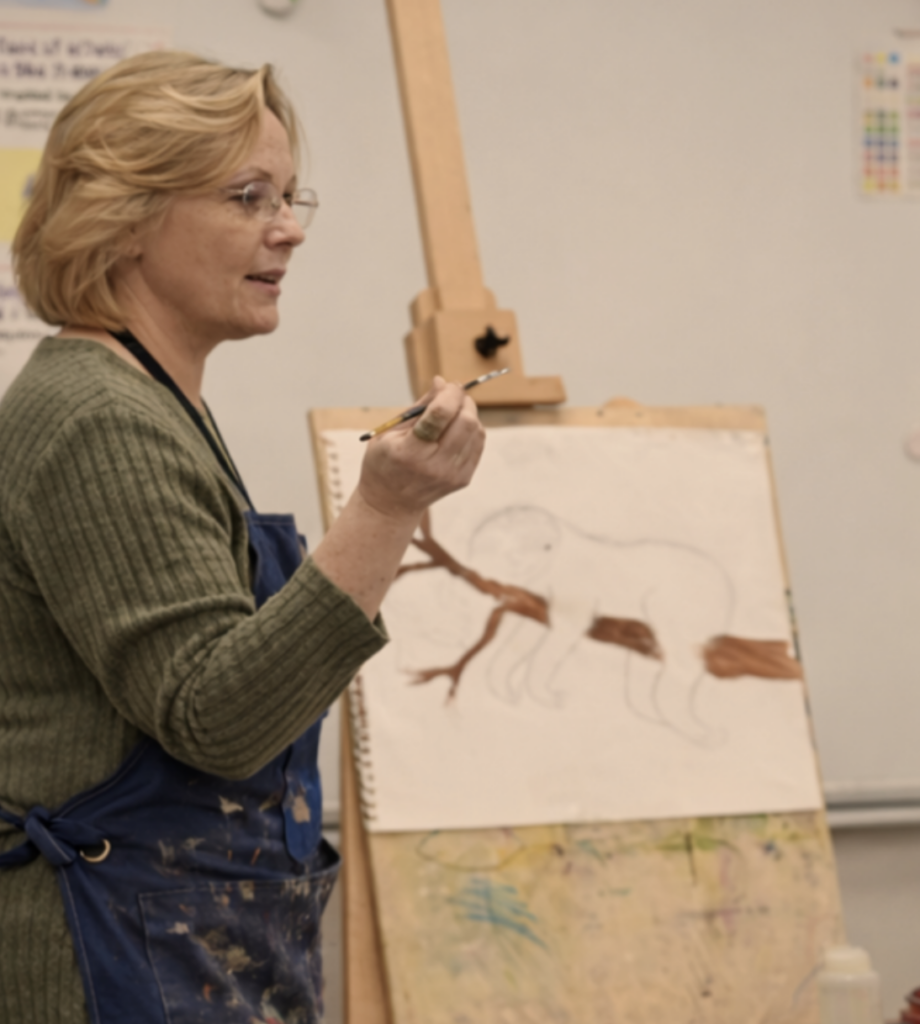
Mrs. Renee Wright is an accomplished artist, art teacher, and photographer who is dedicated to inspiring creativity and building confidence in her students. With a strong passion for visual arts education, she encourages students to explore a wide variety of media while developing solid artistic skills and meaningful self-expression. Her artistic work includes photography and detailed pen-and-ink drawings. Renee is committed to fostering a positive and engaging classroom environment where every student is encouraged to discover and develop their unique creative voice.
Mrs. Wright’s students at CCA annually submit artwork to competitions sponsored by the South Carolina Association of Christian Schools. Her students have earned numerous awards, including multiple “Best of Show” honors. Artwork created in CCA art classes is proudly displayed throughout the school, showcasing the talent and creativity of her students.
It is hard to overstate the value she brings to CCA. Art teachers are essential in schools for fostering creativity, critical thinking, and emotional expression, which improves student engagement, attendance, and academic performance across subjects. They offer a unique, hands-on learning environment that encourages experimentation, risk-taking, and the development of essential motor and social skills.
Key values provided by art teachers include:
- Cognitive and Academic Support: Art education enhances problem-solving skills and boosts imagination, preparing students for the 21st-century job market.
- Emotional Well-being and Inclusion: The art room acts as a safe, therapeutic space that allows students to express feelings and reduces stress, often serving as a motivator for attendance.
- Personal Identity and Growth: Art teachers help students build confidence and develop their own artistic voice through diverse media and techniques.
- School Culture: They strengthen school culture by creating a vibrant environment, producing, and displaying student work, which brings joy and beauty to the community.
- Holistic Education: Art teachers provide a necessary break from core academics, offering a different way for students to learn, succeed, and build a portfolio for future careers.
Ultimately, art teachers nurture the “whole child” by allowing students to explore their interests, learn from mistakes, and develop innovative thinking skills
Pictured here is Mrs. Wright in her art studio at CCA: